Acryterna beyond heat: The importance of dimensional stability
Performance and material selection in industrial filtration
Filtration plays a critical role in improving air quality, particularly in industries such as steel, cement and mining. In these sectors, filter cost and service life are key performance indicators. Premature failure of filter bags leads to increased costs, production losses, and environmental concerns, while frequent replacement also raises labour and operational expenses. Therefore, durability and extended service life are central to the evaluation of filtration systems.
Baghouse filtration systems are among the most effective industrial separation technologies for capturing fine particulates. However, evaluating performance solely based on initial filtration efficiency is insufficient. Parameters such as pressure drop, cleanability, dimensional stability, and bag lifetime must be considered together to ensure long-term efficiency and reliability.
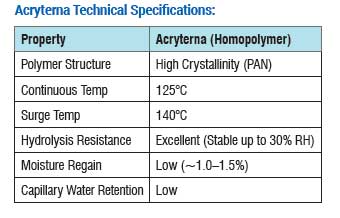
Polyacrylonitrile (PAN) fibres are widely used in industrial filtration due to their high thermal stability, low shrinkage, resistance to many organic solvents, and strong hydrolysis resistance. These properties make PAN-based materials particularly suitable for demanding process environments such as cement plants, where acidic conditions are prevalent.
Operating conditions and material performance in cement plants
In the cement industry, hot gas filtration is characterised not only by high temperatures but also by dynamic conditions involving fluctuating humidity and chemical loading. These factors directly affect both filtration performance and material durability.
For this reason, homopolymer acrylic fibres have been developed to provide long-term mechanical and chemical stability under elevated temperatures and harsh operating environments.
The preference for homopolymer fibre-based filter bags in cement plants is driven by several factors, including stable performance within the medium temperature range of 120–140 °C, strong chemical resistance in acidic environments, and cost-effectiveness achieved through extended service life. These characteristics help reduce maintenance frequency while supporting operational continuity.
While homopolymer fibres are recognised in the literature for their chemical and thermal stability, the performance of filter media in cement applications extends beyond particulate capture. Materials must also withstand aggressive process gases, humidity fluctuations, and continuous mechanical stress. Therefore, material selection should not be limited to temperature resistance alone, but should also consider the ability to maintain mechanical, chemical, and dimensional integrity under real operating conditions.
Impact of dimensional stability on filtration performance
Dimensional stability is a critical performance parameter in practical applications. Changes such as shrinkage, elongation, or deformation during service can negatively impact filtration efficiency. These changes may increase friction between the bag and cage, cause stress concentration at seams, and lead to sealing issues at the bag opening.
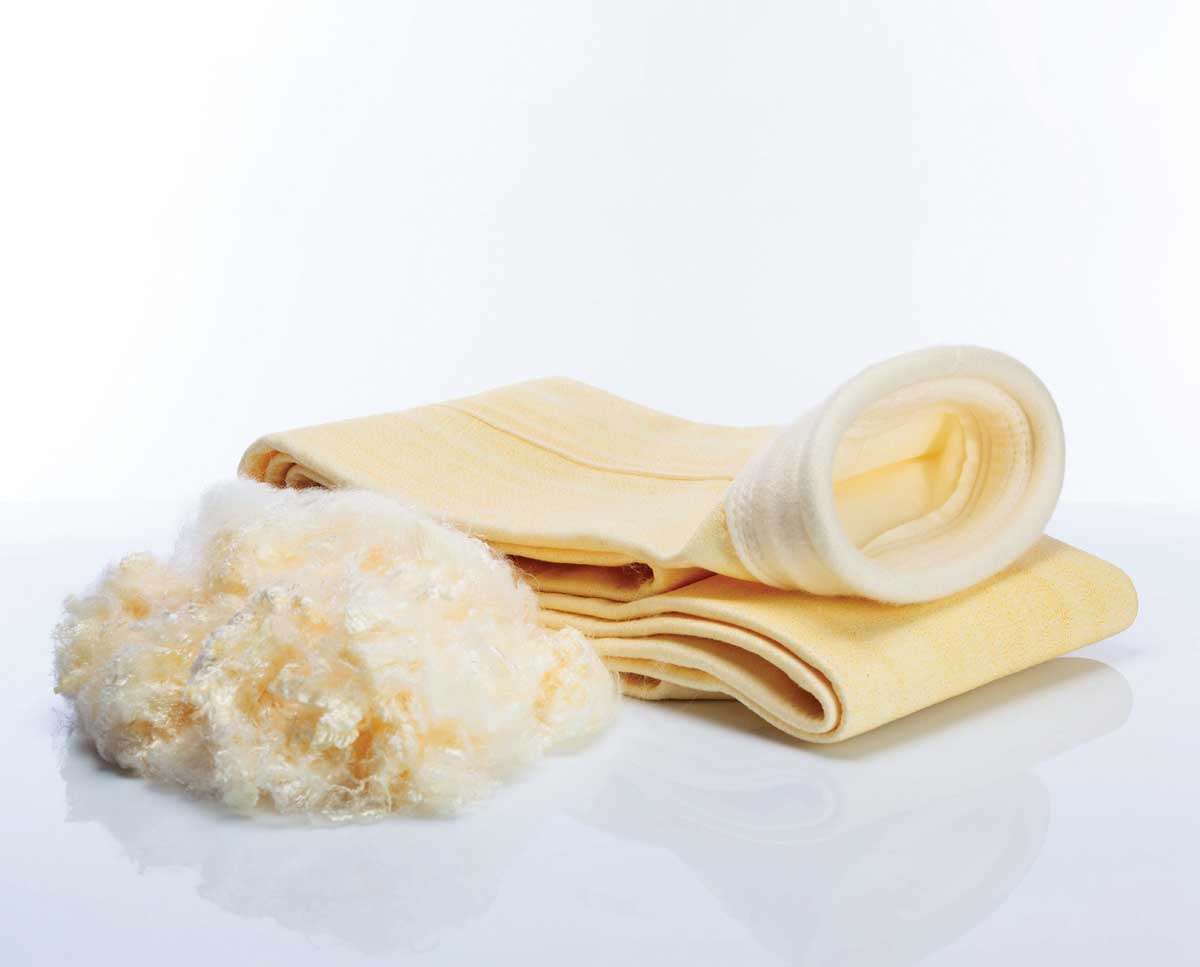
Acryterna homopolymer fibre has been specifically engineered to minimise these risks through its ‘no dimensional change’ characteristic. This stability ensures predictable bag behaviour, balanced load distribution, and more efficient maintenance planning.
Conclusion
The performance of materials used in hot gas filtration in the cement industry should be evaluated from both polymer chemistry and field performance perspectives. PAN-based structures offer a balanced combination of mechanical strength, thermal stability and chemical resistance, while known degradation mechanisms under hydrolysis highlight the importance of proper material selection. In this context, homopolymer acrylic fibres stand out as a reliable and sustainable solution for demanding filtration conditions.
(Communication by the management of the company)