The Critical Role of Homopolymer Acrylic in High-Performance Filtration
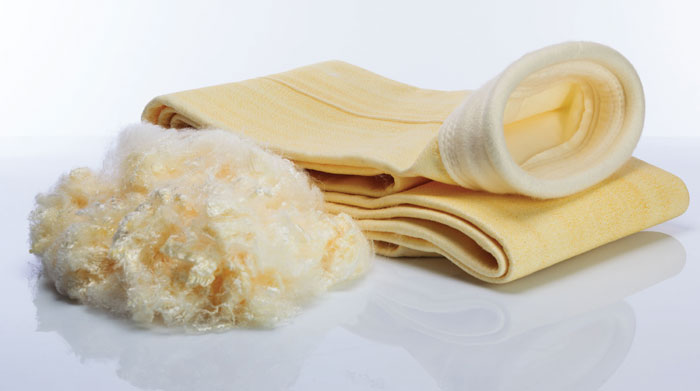
Acryterna, a 100 per cent homopolymer acrylic fiber, delivers superior hydrolytic resistance, thermal stability, and durability for demanding industrial filtration environments where copolymers fail.
In the competitive landscape of industrial filtration, the term “acrylic” is often used broadly. However, for plant managers and engineers focused on longevity and efficiency, the distinction between Homopolymer and Copolymer acrylic is the defining factor in filter bag performance. At Aksa Akrilik, we understand that harsh environments demand precise engineering. With Acryterna, our specialised homopolymer acrylic solution, we provide a technical advantage that far exceeds alternatives.
Microscale Differences in Crystallinity and Structure
To understand why generic filters fail, one must look at the polymer chain.
The hydrolytic resistance of homopolymer acrylic is derived not only from its chemical composition but also from its physical morphology. As established by Frushour (1987), the para-crystalline structure of homopolymer PAN possesses a high density that acts as a barrier, preventing water molecules from penetrating the fiber’s interior. Conversely, the randomly positioned side groups in copolymers disrupt this crystalline order, rendering the fiber an ‘open target’ for degradation.
Acryterna (Homopolymer) maintains a high degree of crystallinity and a para-crystalline structure. This dense, regular packing ensures superior chemical and thermal resistance, preventing the formation of moisture traps and ensuring durability in harsh environments where less ordered structures degrade.
Take the Advantage with Acryterna:
Unlike copolymers, Acryterna is engineered to resist this degradation. While copolymers struggle above 5 per cent humidity, Acryterna shows no tendency to hydrolyse even up to 30 per cent relative humidity. It offers excellent acid and abrasion resistance where polyesters or copolymers would fail due to potential hydrolysis.
Thermal Stability and Operational Range
For industries such as power generation, cement, and smelting, thermal stability is non-negotiable.
Acryterna (Homopolymer): Designed for continuous operation at 125°C with surge capabilities up to 140°C. It possesses a much higher modulus and tenacity, ensuring dimensional stability.
Furthermore, homopolymer fibers do not melt; carbonisation only starts at temperatures over 160°C, providing a robust safety margin.
Applications and Strategic Value
Acryterna is the ideal solution for both dry and wet filtration in pH ranges of 3-10.
Key application areas are:
• Power generation and Incineration
• Cement and Limestone processing
• Asphalt and Smelting industries
Conclusion
For critical filtration processes, the choice of homopolymer acrylic is not just a technical preference but a necessity for operational safety. To ensure a filter bag life of several years rather than months, homopolymer acrylic is the proven industrial solution.
By choosing Acryterna, you are choosing a 100 per cent Homopolymer acrylic fiber with low density, superior thermal resilience, and unmatched chemical stability. For operations that cannot afford downtime, Acryterna is the proven choice.
Authors:
Ayse Karadag Eren| Aksa Akrilik| Acryterna Product Manager
Zekiye Has Tekiner| Aksa Akrilik| Acryterna Quality Assurance Manager